
O artista
Antonio Hase
Antonio Hase nasceu em 1963 na Bósnia ocidental com o apelido Draganović. Chegou a Hamburgo em 1984, viveu depois em Lucerna e, desde então, vive e trabalha em Munique. Artista notavelmente versátil — pintor, romancista, argumentista, actor e realizador — dedica-se às artes visuais há mais de quarenta anos.
Participa em exposições colectivas desde 1985 e individuais desde 1986, contando com dez exposições individuais. As suas obras integram colecções privadas na Alemanha, Suíça, Canadá, Croácia e Estados Unidos. Como pintor croata-alemão, tem conquistado nos últimos anos um reconhecimento internacional crescente.
A sua pintura tem raízes na abstracção — um compromisso firmado em meados dos anos 1980 através da amizade com Vlado Kristl, que o introduziu no mundo da abstracção e lhe apresentou o grande pintor informalista alemão Emil Schumacher. Ao longo de quatro décadas de trabalho, do construtivismo ao desconstrutivismo, afirmou-se como pioneiro do desconstrutivismo na pintura.
Inspirations and dedications – Emil Schumacher, Vlado Kristl and Antonio Hase
"The motif of my painting is always a dedication to Schumacher and Kristl."
Antonio Hase's artistic path was shaped by encounters with great names of world art. As early as the eighties, his friend Vlado Kristl introduced him to the German painter Emil Schumacher. That meeting left a deep mark on Hase, awakening a profound bond with abstract expression to which he has remained faithful ever since.
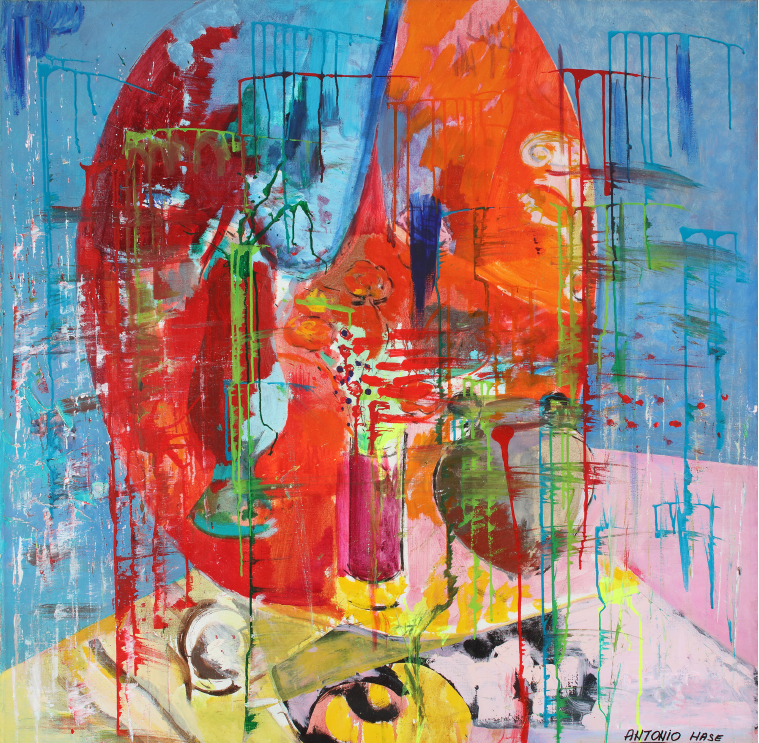
At that meeting Hase promised Schumacher that he would follow his path and devote himself to abstraction. Although both Schumacher and Kristl have since passed away, their presence lives on strongly in Hase's work. He turned their legacy into one of his significant works – a painting with the motif of a monument and an urn as a symbolic dedication to Schumacher, while scattered flower petals fall onto the urn in memory of Vlado Kristl.
Hase explains that the petals of Kristl's flowers also carry a personal meaning – they stand for the moment Kristl introduced him to Schumacher. The painting was exhibited and drew great interest, although at the time the artist had no chance to speak about its meaning in detail. Today he wants to share that story and show the deeply personal dimension of his work.
With these works Antonio Hase not only keeps the memory of his friends and mentors alive, but shows that art can be a bridge between generations and a lasting message of gratitude.