
Taiteilija
Antonio Hase
Antonio Hase syntyi vuonna 1963 Länsi-Bosniassa sukunimellä Draganović. Hän saapui Hampuriin vuonna 1984, asui sittemmin Luzernissa ja on siitä lähtien asunut ja työskennellyt Münchenissä. Poikkeuksellisen monipuolinen taiteilija — maalari, romaanikirjailija, käsikirjoittaja, näyttelijä ja ohjaaja — on omistautunut kuvataiteelle jo yli neljäkymmentä vuotta.
Hän on osallistunut ryhmänäyttelyihin vuodesta 1985 ja pitänyt yksityisnäyttelyitä vuodesta 1986 — niitä on tähän mennessä kymmenen. Hänen teoksiaan on yksityiskokoelmissa Saksassa, Sveitsissä, Kanadassa, Kroatiassa ja Yhdysvalloissa. Kroatialais-saksalaisena maalarina hän on viime vuosina saanut yhä laajempaa kansainvälistä tunnustusta.
Hänen maalaustaiteensa juuret ovat abstraktiossa — valinta, joka syntyi 1980-luvun puolivälissä ystävyydestä Vlado Kristlin kanssa, joka johdatti hänet abstraktion maailmaan ja tutustutti suureen saksalaiseen informel-maalariin Emil Schumacheriin. Neljän vuosikymmenen työn aikana, konstruktivismista dekonstruktivismiin, hän on vakiinnuttanut asemansa maalaustaiteen dekonstruktivismin edelläkävijänä.
Inspirations and dedications – Emil Schumacher, Vlado Kristl and Antonio Hase
"The motif of my painting is always a dedication to Schumacher and Kristl."
Antonio Hase's artistic path was shaped by encounters with great names of world art. As early as the eighties, his friend Vlado Kristl introduced him to the German painter Emil Schumacher. That meeting left a deep mark on Hase, awakening a profound bond with abstract expression to which he has remained faithful ever since.
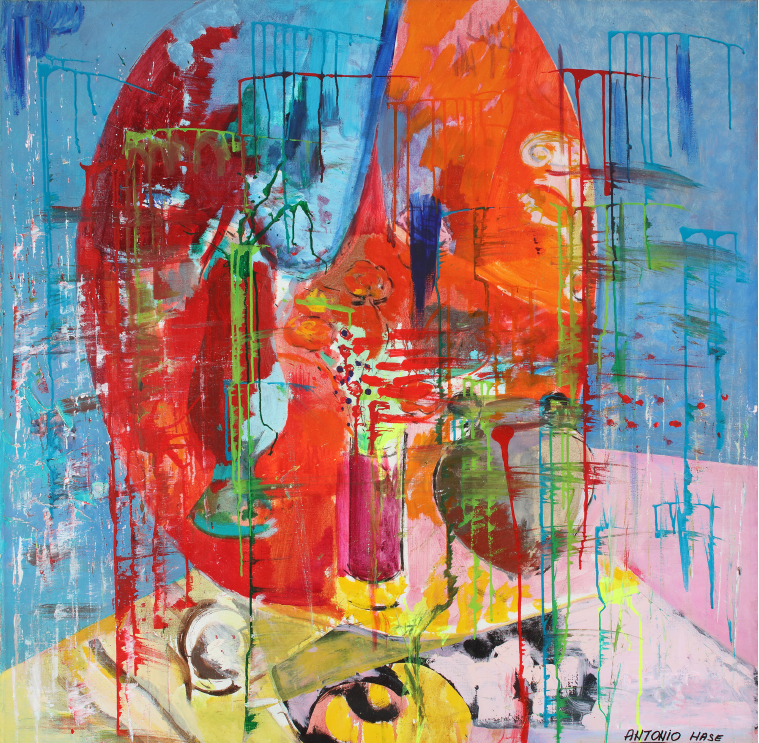
At that meeting Hase promised Schumacher that he would follow his path and devote himself to abstraction. Although both Schumacher and Kristl have since passed away, their presence lives on strongly in Hase's work. He turned their legacy into one of his significant works – a painting with the motif of a monument and an urn as a symbolic dedication to Schumacher, while scattered flower petals fall onto the urn in memory of Vlado Kristl.
Hase explains that the petals of Kristl's flowers also carry a personal meaning – they stand for the moment Kristl introduced him to Schumacher. The painting was exhibited and drew great interest, although at the time the artist had no chance to speak about its meaning in detail. Today he wants to share that story and show the deeply personal dimension of his work.
With these works Antonio Hase not only keeps the memory of his friends and mentors alive, but shows that art can be a bridge between generations and a lasting message of gratitude.