
藝術家
安東尼奧・哈塞
安東尼奧・哈塞(Antonio Hase)1963年生於波士尼亞西部,原姓德拉加諾維奇(Draganović)。1984年抵達漢堡,其後旅居盧森,此後一直在慕尼黑生活與創作。作為一位極為多才的藝術家——畫家、小說家、編劇、演員兼導演——他投身視覺藝術已逾四十年。
自1985年起參加聯展,自1986年起舉辦個展,迄今已舉辦十次個展。其作品獲德國、瑞士、加拿大、克羅埃西亞與美國的私人收藏收納。作為克羅埃西亞裔德國畫家,近年來他在國際上獲得日益廣泛的肯定。
他的繪畫扎根於抽象——這一取向成形於1980年代中期,源自他與弗拉多・克里斯特爾(Vlado Kristl)的友誼;後者將他引入抽象的世界,並把他介紹給德國非定形藝術大師埃米爾・舒馬赫(Emil Schumacher)。在從構成主義走向解構主義的四十年創作中,他確立了自己作為繪畫解構主義先驅的地位。
Inspirations and dedications – Emil Schumacher, Vlado Kristl and Antonio Hase
"The motif of my painting is always a dedication to Schumacher and Kristl."
Antonio Hase's artistic path was shaped by encounters with great names of world art. As early as the eighties, his friend Vlado Kristl introduced him to the German painter Emil Schumacher. That meeting left a deep mark on Hase, awakening a profound bond with abstract expression to which he has remained faithful ever since.
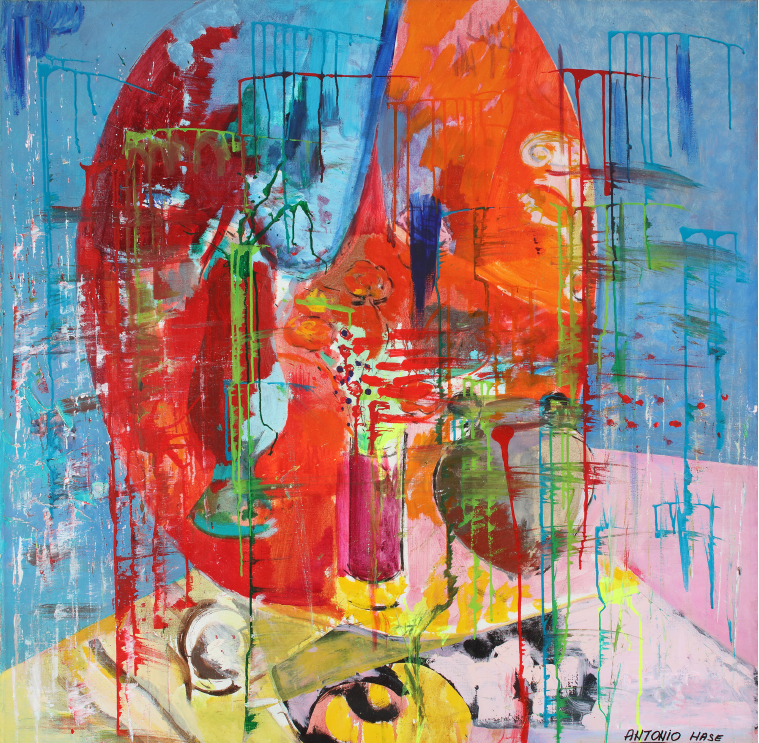
At that meeting Hase promised Schumacher that he would follow his path and devote himself to abstraction. Although both Schumacher and Kristl have since passed away, their presence lives on strongly in Hase's work. He turned their legacy into one of his significant works – a painting with the motif of a monument and an urn as a symbolic dedication to Schumacher, while scattered flower petals fall onto the urn in memory of Vlado Kristl.
Hase explains that the petals of Kristl's flowers also carry a personal meaning – they stand for the moment Kristl introduced him to Schumacher. The painting was exhibited and drew great interest, although at the time the artist had no chance to speak about its meaning in detail. Today he wants to share that story and show the deeply personal dimension of his work.
With these works Antonio Hase not only keeps the memory of his friends and mentors alive, but shows that art can be a bridge between generations and a lasting message of gratitude.