
Sanatçı
Antonio Hase
Antonio Hase 1963 yılında Batı Bosna’da Draganović soyadıyla doğdu. 1984’te Hamburg’a geldi, ardından Luzern’de yaşadı ve o günden beri Münih’te yaşayıp üretiyor. Son derece çok yönlü bir sanatçı — ressam, romancı, senarist, oyuncu ve yönetmen — kırk yılı aşkın süredir kendini görsel sanatlara adamış durumda.
1985’ten bu yana karma sergilere, 1986’dan bu yana kişisel sergilere katılıyor; bugüne dek on kişisel sergi açtı. Eserleri Almanya, İsviçre, Kanada, Hırvatistan ve ABD’deki özel koleksiyonlarda yer alıyor. Hırvat-Alman bir ressam olarak son yıllarda giderek artan bir uluslararası tanınırlık kazanıyor.
Resmi soyutta kök salmıştır — bu yönelim, 1980’lerin ortasında Vlado Kristl ile kurduğu dostluk sayesinde biçimlendi; Kristl onu soyutun dünyasına soktu ve büyük Alman enformel ressamı Emil Schumacher ile tanıştırdı. Konstrüktivizmden dekonstrüktivizme uzanan kırk yıllık çalışması boyunca resimde dekonstrüktivizmin öncülerinden biri olarak kendini kabul ettirdi.
Inspirations and dedications – Emil Schumacher, Vlado Kristl and Antonio Hase
"The motif of my painting is always a dedication to Schumacher and Kristl."
Antonio Hase's artistic path was shaped by encounters with great names of world art. As early as the eighties, his friend Vlado Kristl introduced him to the German painter Emil Schumacher. That meeting left a deep mark on Hase, awakening a profound bond with abstract expression to which he has remained faithful ever since.
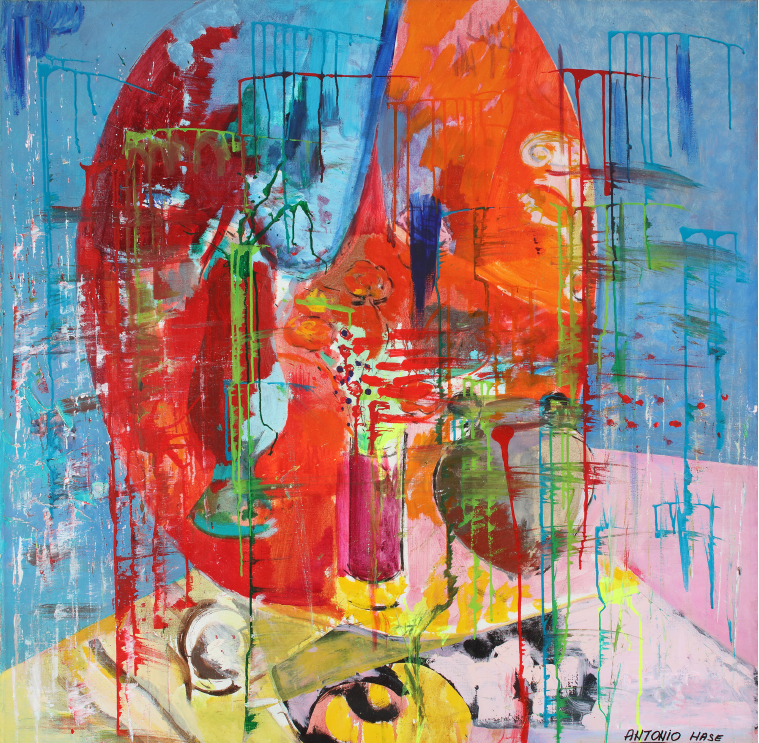
At that meeting Hase promised Schumacher that he would follow his path and devote himself to abstraction. Although both Schumacher and Kristl have since passed away, their presence lives on strongly in Hase's work. He turned their legacy into one of his significant works – a painting with the motif of a monument and an urn as a symbolic dedication to Schumacher, while scattered flower petals fall onto the urn in memory of Vlado Kristl.
Hase explains that the petals of Kristl's flowers also carry a personal meaning – they stand for the moment Kristl introduced him to Schumacher. The painting was exhibited and drew great interest, although at the time the artist had no chance to speak about its meaning in detail. Today he wants to share that story and show the deeply personal dimension of his work.
With these works Antonio Hase not only keeps the memory of his friends and mentors alive, but shows that art can be a bridge between generations and a lasting message of gratitude.