
Pelukis
Antonio Hase
Antonio Hase dilahirkan pada 1963 di barat Bosnia dengan nama keluarga Draganović. Beliau tiba di Hamburg pada 1984, kemudian menetap di Lucerne, dan sejak itu tinggal serta berkarya di München. Seorang seniman yang amat serba boleh — pelukis, novelis, penulis skrip, pelakon dan pengarah — beliau telah mengabdikan lebih empat puluh tahun kepada seni visual.
Beliau menyertai pameran berkumpulan sejak 1985 dan pameran solo sejak 1986 — setakat ini sepuluh pameran solo. Karyanya berada dalam koleksi persendirian di Jerman, Switzerland, Kanada, Croatia dan Amerika Syarikat. Sebagai pelukis Croatia-Jerman, beliau memperoleh pengiktirafan antarabangsa yang semakin luas sejak beberapa tahun kebelakangan ini.
Lukisannya berakar dalam abstraksi — satu haluan yang terbentuk pada pertengahan 1980-an melalui persahabatannya dengan Vlado Kristl, yang membawanya ke dunia abstraksi dan memperkenalkannya kepada pelukis informel Jerman yang hebat, Emil Schumacher. Sepanjang empat dekad berkarya, daripada konstruktivisme kepada dekonstruktivisme, beliau memantapkan diri sebagai perintis dekonstruktivisme dalam seni lukis.
Inspirations and dedications – Emil Schumacher, Vlado Kristl and Antonio Hase
"The motif of my painting is always a dedication to Schumacher and Kristl."
Antonio Hase's artistic path was shaped by encounters with great names of world art. As early as the eighties, his friend Vlado Kristl introduced him to the German painter Emil Schumacher. That meeting left a deep mark on Hase, awakening a profound bond with abstract expression to which he has remained faithful ever since.
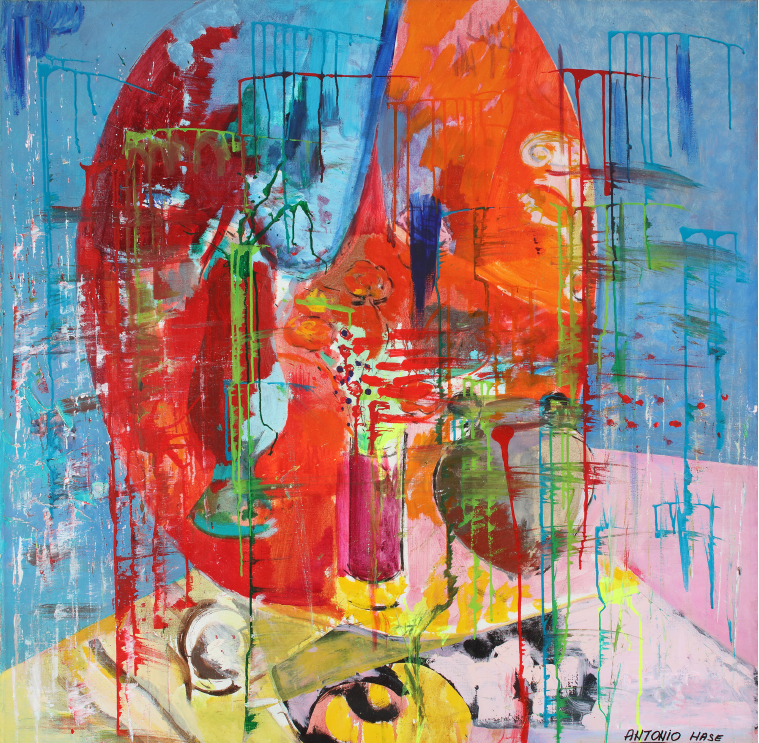
At that meeting Hase promised Schumacher that he would follow his path and devote himself to abstraction. Although both Schumacher and Kristl have since passed away, their presence lives on strongly in Hase's work. He turned their legacy into one of his significant works – a painting with the motif of a monument and an urn as a symbolic dedication to Schumacher, while scattered flower petals fall onto the urn in memory of Vlado Kristl.
Hase explains that the petals of Kristl's flowers also carry a personal meaning – they stand for the moment Kristl introduced him to Schumacher. The painting was exhibited and drew great interest, although at the time the artist had no chance to speak about its meaning in detail. Today he wants to share that story and show the deeply personal dimension of his work.
With these works Antonio Hase not only keeps the memory of his friends and mentors alive, but shows that art can be a bridge between generations and a lasting message of gratitude.