
Mākslinieks
Antonio Hase
Antonio Hase dzimis 1963. gadā Bosnijas rietumos ar uzvārdu Draganović. 1984. gadā viņš ieradās Hamburgā, vēlāk dzīvoja Lucernā, un kopš tā laika dzīvo un strādā Minhenē. Ārkārtīgi daudzpusīgs mākslinieks — gleznotājs, romānu autors, scenārists, aktieris un režisors — tēlotājmākslai viņš veltījis jau vairāk nekā četrdesmit gadus.
Grupu izstādēs piedalās kopš 1985. gada, personālizstādes rīko kopš 1986. gada — līdz šim to bijušas desmit. Viņa darbi atrodas privātkolekcijās Vācijā, Šveicē, Kanādā, Horvātijā un ASV. Kā horvātu un vācu gleznotājs pēdējos gados viņš gūst arvien plašāku starptautisku atzinību.
Viņa glezniecība sakņojas abstrakcijā — izvēle, kas nobrieda astoņdesmito gadu vidū draudzībā ar Vlado Kristlu, kurš viņu ieveda abstrakcijas pasaulē un iepazīstināja ar izcilo vācu informela gleznotāju Emīlu Šūmaheru. Četrās darba desmitgadēs, no konstruktīvisma līdz dekonstruktīvismam, viņš nostiprinājies kā dekonstruktīvisma glezniecībā pionieris.
Inspirations and dedications – Emil Schumacher, Vlado Kristl and Antonio Hase
"The motif of my painting is always a dedication to Schumacher and Kristl."
Antonio Hase's artistic path was shaped by encounters with great names of world art. As early as the eighties, his friend Vlado Kristl introduced him to the German painter Emil Schumacher. That meeting left a deep mark on Hase, awakening a profound bond with abstract expression to which he has remained faithful ever since.
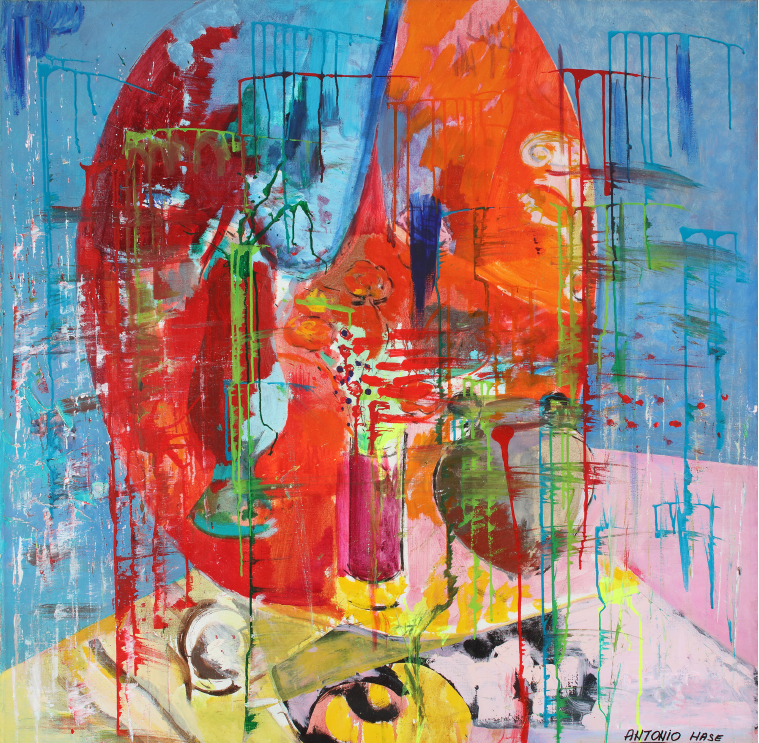
At that meeting Hase promised Schumacher that he would follow his path and devote himself to abstraction. Although both Schumacher and Kristl have since passed away, their presence lives on strongly in Hase's work. He turned their legacy into one of his significant works – a painting with the motif of a monument and an urn as a symbolic dedication to Schumacher, while scattered flower petals fall onto the urn in memory of Vlado Kristl.
Hase explains that the petals of Kristl's flowers also carry a personal meaning – they stand for the moment Kristl introduced him to Schumacher. The painting was exhibited and drew great interest, although at the time the artist had no chance to speak about its meaning in detail. Today he wants to share that story and show the deeply personal dimension of his work.
With these works Antonio Hase not only keeps the memory of his friends and mentors alive, but shows that art can be a bridge between generations and a lasting message of gratitude.