
L’artista
Antonio Hase
Antonio Hase è nato nel 1963 nella Bosnia occidentale con il cognome Draganović. Giunge ad Amburgo nel 1984, poi a Lucerna, e da allora vive e lavora a Monaco di Baviera. Artista straordinariamente versatile — pittore, romanziere, sceneggiatore, attore e regista — da oltre quarant’anni dedica il suo lavoro alle arti visive.
Espone in mostre collettive dal 1985 e personali dal 1986, con dieci mostre personali all’attivo. Le sue opere si trovano in collezioni private in Germania, Svizzera, Canada, Croazia e Stati Uniti. Pittore croato-tedesco, negli ultimi anni ha ottenuto un riconoscimento internazionale sempre maggiore.
La sua pittura affonda le radici nell’astrazione — una scelta maturata a metà degli anni Ottanta grazie all’amicizia con Vlado Kristl, che lo introdusse al mondo dell’astrazione e gli fece conoscere il grande pittore informale tedesco Emil Schumacher. In quattro decenni di lavoro, dal costruttivismo al decostruttivismo, si è affermato come pioniere del decostruttivismo in pittura.
Inspirations and dedications – Emil Schumacher, Vlado Kristl and Antonio Hase
"The motif of my painting is always a dedication to Schumacher and Kristl."
Antonio Hase's artistic path was shaped by encounters with great names of world art. As early as the eighties, his friend Vlado Kristl introduced him to the German painter Emil Schumacher. That meeting left a deep mark on Hase, awakening a profound bond with abstract expression to which he has remained faithful ever since.
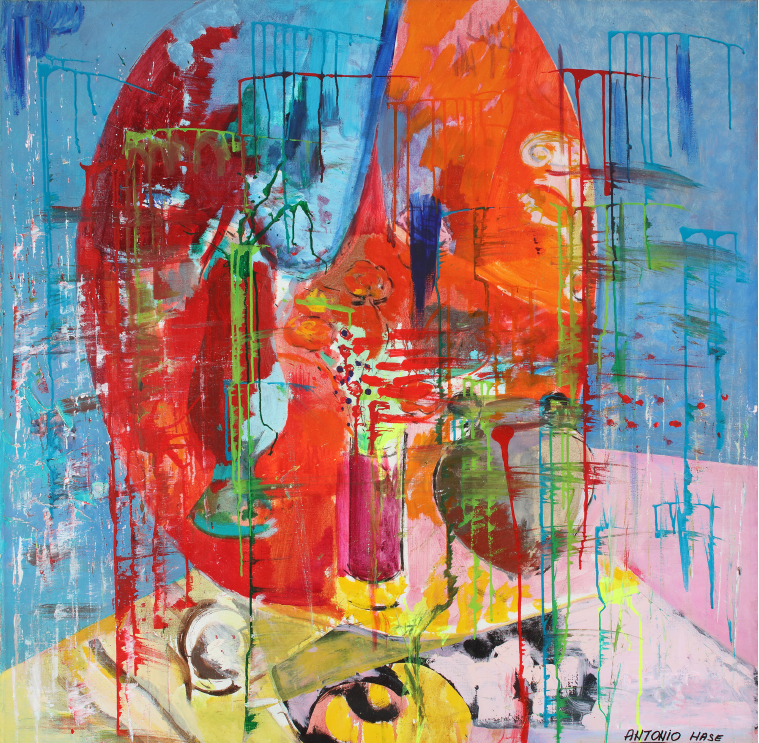
At that meeting Hase promised Schumacher that he would follow his path and devote himself to abstraction. Although both Schumacher and Kristl have since passed away, their presence lives on strongly in Hase's work. He turned their legacy into one of his significant works – a painting with the motif of a monument and an urn as a symbolic dedication to Schumacher, while scattered flower petals fall onto the urn in memory of Vlado Kristl.
Hase explains that the petals of Kristl's flowers also carry a personal meaning – they stand for the moment Kristl introduced him to Schumacher. The painting was exhibited and drew great interest, although at the time the artist had no chance to speak about its meaning in detail. Today he wants to share that story and show the deeply personal dimension of his work.
With these works Antonio Hase not only keeps the memory of his friends and mentors alive, but shows that art can be a bridge between generations and a lasting message of gratitude.