
האמן
אנטוניו האסה
אנטוניו האסה נולד ב־1963 במערב בוסניה בשם המשפחה דרגנוביץ׳ (Draganović). ב־1984 הגיע להמבורג, לאחר מכן שהה בלוצרן, ומאז הוא חי ויוצר במינכן. אמן רב־גוני באופן יוצא דופן — צייר, סופר, תסריטאי, שחקן ובמאי — הוא מקדיש לאמנות החזותית יותר מארבעים שנה.
הוא משתתף בתערוכות קבוצתיות מאז 1985 ובתערוכות יחיד מאז 1986 — עד היום עשר תערוכות יחיד. יצירותיו נמצאות באוספים פרטיים בגרמניה, שווייץ, קנדה, קרואטיה וארצות הברית. כצייר קרואטי־גרמני הוא זוכה בשנים האחרונות להכרה בינלאומית רחבה יותר ויותר.
ציורו מושרש בהפשטה — בחירה שהתגבשה באמצע שנות השמונים דרך ידידותו עם ולאדו קריסטל, שהכניס אותו לעולם ההפשטה והכיר לו את צייר האנפורמל הגרמני הגדול אמיל שומאכר. לאורך ארבעה עשורים של עבודה, מקונסטרוקטיביזם ועד דקונסטרוקטיביזם, ביסס את מעמדו כחלוץ הדקונסטרוקטיביזם בציור.
Inspirations and dedications – Emil Schumacher, Vlado Kristl and Antonio Hase
"The motif of my painting is always a dedication to Schumacher and Kristl."
Antonio Hase's artistic path was shaped by encounters with great names of world art. As early as the eighties, his friend Vlado Kristl introduced him to the German painter Emil Schumacher. That meeting left a deep mark on Hase, awakening a profound bond with abstract expression to which he has remained faithful ever since.
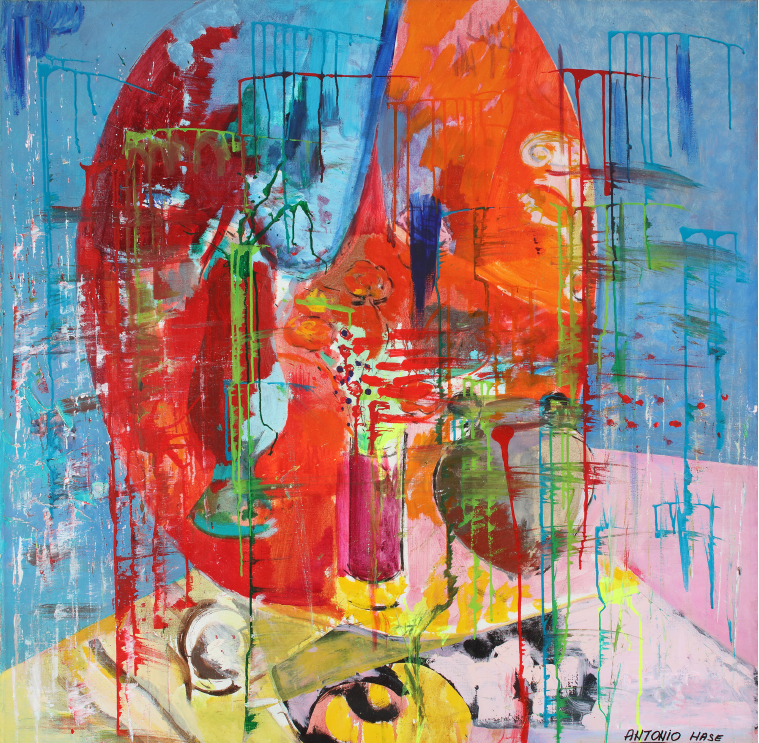
At that meeting Hase promised Schumacher that he would follow his path and devote himself to abstraction. Although both Schumacher and Kristl have since passed away, their presence lives on strongly in Hase's work. He turned their legacy into one of his significant works – a painting with the motif of a monument and an urn as a symbolic dedication to Schumacher, while scattered flower petals fall onto the urn in memory of Vlado Kristl.
Hase explains that the petals of Kristl's flowers also carry a personal meaning – they stand for the moment Kristl introduced him to Schumacher. The painting was exhibited and drew great interest, although at the time the artist had no chance to speak about its meaning in detail. Today he wants to share that story and show the deeply personal dimension of his work.
With these works Antonio Hase not only keeps the memory of his friends and mentors alive, but shows that art can be a bridge between generations and a lasting message of gratitude.