
Мастак
Антоніа Хазэ
Антоніа Хазэ нарадзіўся ў 1963 годзе ў заходняй Босніі пад прозвішчам Драгановіч. У 1984 годзе ён прыехаў у Гамбург, потым жыў у Люцэрне, а з таго часу жыве і працуе ў Мюнхене. Надзвычай разнабаковы мастак — жывапісец, раманіст, сцэнарыст, акцёр і рэжысёр — ён прысвячае сябе выяўленчаму мастацтву ўжо больш за сорак гадоў.
У групавых выставах удзельнічае з 1985 года, персанальныя ладзіць з 1986 — на сёння іх дзесяць. Яго працы знаходзяцца ў прыватных зборах у Германіі, Швейцарыі, Канадзе, Харватыі і ЗША. Як харвацка-нямецкі жывапісец у апошнія гады ён атрымлівае ўсё больш шырокае міжнароднае прызнанне.
Яго жывапіс укаранёны ў абстракцыі — выбар, які склаўся ў сярэдзіне васьмідзесятых дзякуючы сяброўству з Владам Крыстлам, што ўвёў яго ў свет абстракцыі і пазнаёміў з вялікім нямецкім мастаком інфармелю Эмілем Шумахерам. За чатыры дзесяцігоддзі працы, ад канструктывізму да дэканструктывізму, ён сцвердзіўся як піянер дэканструктывізму ў жывапісе.
Inspirations and dedications – Emil Schumacher, Vlado Kristl and Antonio Hase
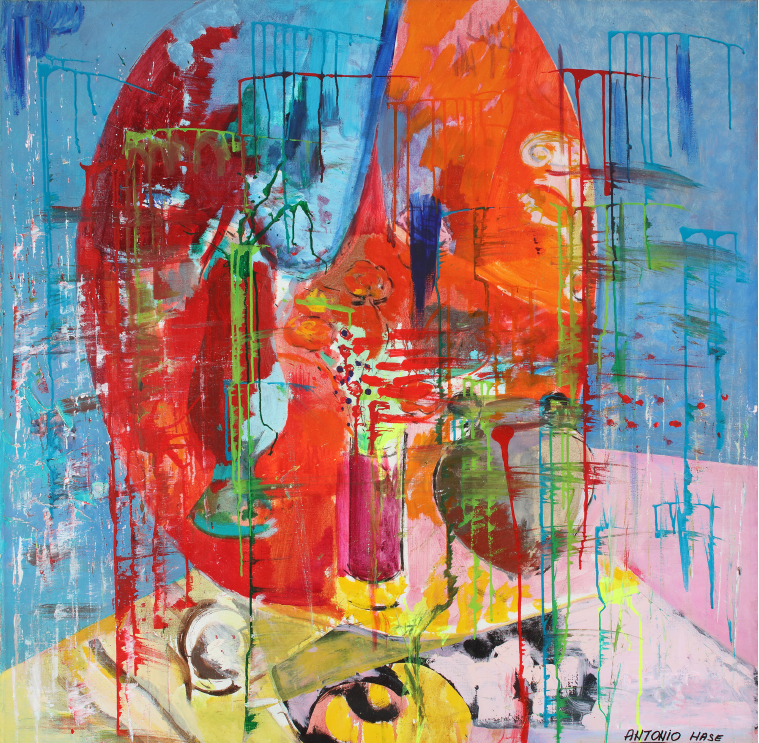
"The motif of my painting is always a dedication to Schumacher and Kristl."
Antonio Hase's artistic path was shaped by encounters with great names of world art. As early as the eighties, his friend Vlado Kristl introduced him to the German painter Emil Schumacher. That meeting left a deep mark on Hase, awakening a profound bond with abstract expression to which he has remained faithful ever since.
At that meeting Hase promised Schumacher that he would follow his path and devote himself to abstraction. Although both Schumacher and Kristl have since passed away, their presence lives on strongly in Hase's work. He turned their legacy into one of his significant works – a painting with the motif of a monument and an urn as a symbolic dedication to Schumacher, while scattered flower petals fall onto the urn in memory of Vlado Kristl.
Hase explains that the petals of Kristl's flowers also carry a personal meaning – they stand for the moment Kristl introduced him to Schumacher. The painting was exhibited and drew great interest, although at the time the artist had no chance to speak about its meaning in detail. Today he wants to share that story and show the deeply personal dimension of his work.
With these works Antonio Hase not only keeps the memory of his friends and mentors alive, but shows that art can be a bridge between generations and a lasting message of gratitude.