
الفنان
أنطونيو هاسه
وُلد أنطونيو هاسه عام 1963 في غرب البوسنة باسم العائلة دراغانوفيتش (Draganović). وصل إلى هامبورغ عام 1984، ثم أقام في لوتسرن، ومنذ ذلك الحين يعيش ويعمل في ميونخ. فنان متعدّد المواهب إلى حدّ لافت — رسّام وروائي وكاتب سيناريو وممثل ومخرج — كرّس أكثر من أربعين عامًا للفنون البصرية.
يشارك في المعارض الجماعية منذ 1985 وفي المعارض الفردية منذ 1986، وقد أقام حتى اليوم عشرة معارض فردية. تُقتنى أعماله ضمن مجموعات خاصة في ألمانيا وسويسرا وكندا وكرواتيا والولايات المتحدة. وبوصفه رسّامًا كرواتيًا ألمانيًا، ينال في السنوات الأخيرة اعترافًا دوليًا متزايدًا.
تضرب لوحاته بجذورها في التجريد — توجّهٌ تبلور في منتصف الثمانينيات عبر صداقته مع فلادو كريستل، الذي أدخله عالم التجريد وعرّفه على رسّام الأنفورميل الألماني الكبير إميل شوماخر. وعلى مدى أربعة عقود من العمل، من البنائية إلى التفكيكية، رسّخ مكانته بوصفه رائدًا للتفكيكية في الرسم.
Inspirations and dedications – Emil Schumacher, Vlado Kristl and Antonio Hase
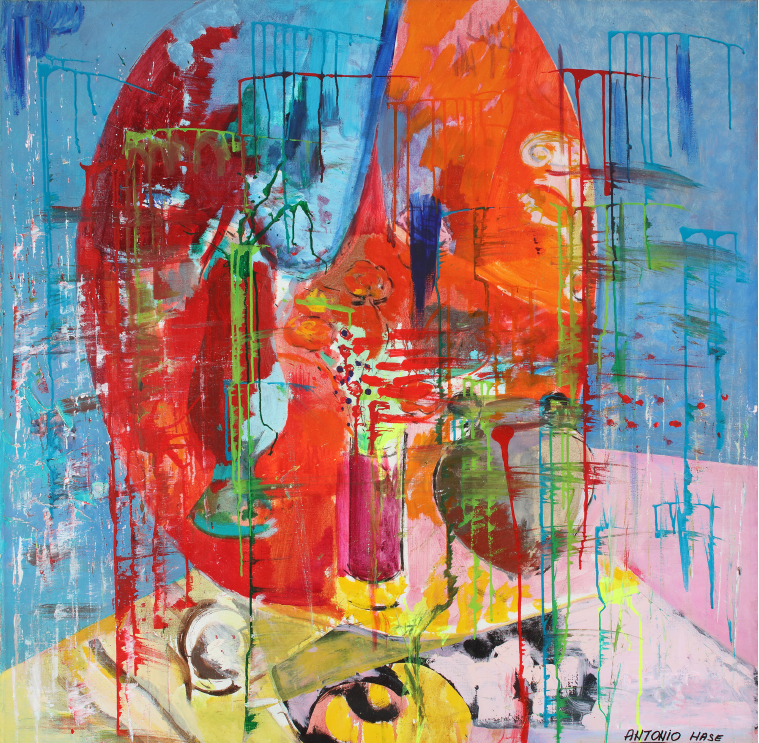
"The motif of my painting is always a dedication to Schumacher and Kristl."
Antonio Hase's artistic path was shaped by encounters with great names of world art. As early as the eighties, his friend Vlado Kristl introduced him to the German painter Emil Schumacher. That meeting left a deep mark on Hase, awakening a profound bond with abstract expression to which he has remained faithful ever since.
At that meeting Hase promised Schumacher that he would follow his path and devote himself to abstraction. Although both Schumacher and Kristl have since passed away, their presence lives on strongly in Hase's work. He turned their legacy into one of his significant works – a painting with the motif of a monument and an urn as a symbolic dedication to Schumacher, while scattered flower petals fall onto the urn in memory of Vlado Kristl.
Hase explains that the petals of Kristl's flowers also carry a personal meaning – they stand for the moment Kristl introduced him to Schumacher. The painting was exhibited and drew great interest, although at the time the artist had no chance to speak about its meaning in detail. Today he wants to share that story and show the deeply personal dimension of his work.
With these works Antonio Hase not only keeps the memory of his friends and mentors alive, but shows that art can be a bridge between generations and a lasting message of gratitude.